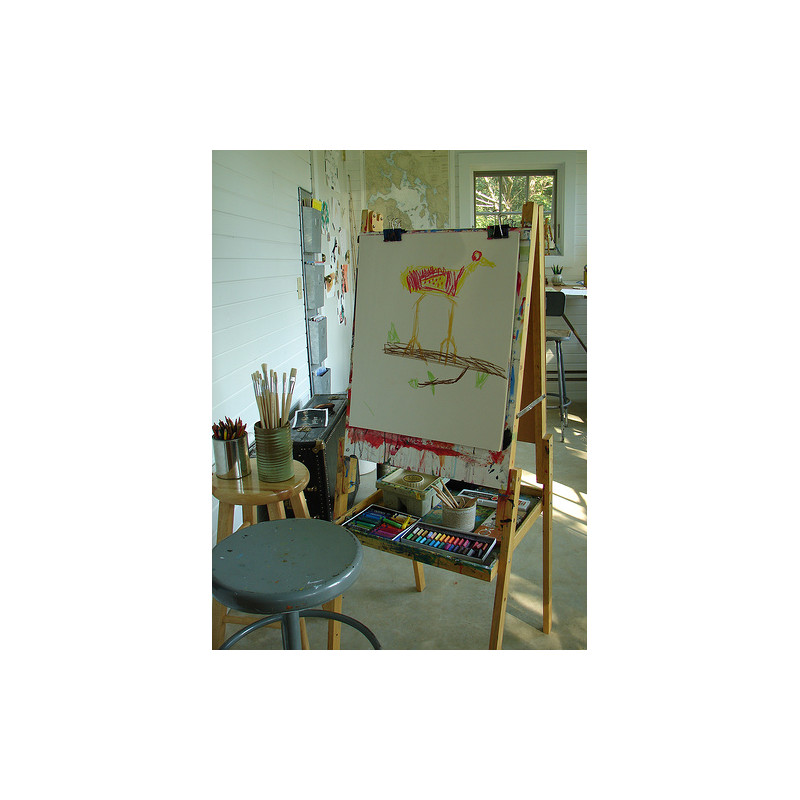
Guidelines for safety and maintaining order in the studioWhether or not there are potential hazards associated with the use of art materials, proper studio work practices should be guided and followed. Before starting a painting session, carefully read the information on the labels.
While in the studio:- Provide fresh air, ventilation and allow air movement.
- Do not sleep in the studio without first removing painting materials to a safe place, and especially place unused solvents and soiled cloths in fireproof and airtight containers as far as solvent volatilization is concerned.
- All materials, especially solvents, should be stored in tightly sealed containers (with caps) when not in use.
- Do not expose art materials to direct heat sources or contact with fire.
When working in the studio:- Refrain from eating, drinking, smoking while working, as there may be a risk of absorbing (ingesting) harmful substances
- Avoid excessive contact of chemicals, especially solvents, with the skin.
- Avoid the habit of holding brushes in the mouth: paints are not intended for consumption.
- Avoid directly applying paint with fingers.
- If you use this method, protect your hands with protective cream or use medical gloves.
- When using spray paint substances (paints), work in a suitable protective mask, as well as ensure adequate ventilation of the room. This will avoid inhaling particles sprayed into the air. A ventilation system that exhausts vapors to the outside is recommended.
- When using powdered pigments, work in a suitable protective mask, as well as ensure adequate ventilation of the room. This will avoid inhaling particles sprayed into the air.
- During painting sessions, do not pour more solvent than needed. Excess solvent will evaporate and float in the studio. In addition, a ventilation system that exhausts the vapors to the outside is recommended .
- If solvent or paint gets into the eyes or on the skin, wash it off immediately with plenty of water.
- Avoid excessive, prolonged inhalation of solvent fumes.
- Immediately clean up any spilled paint or solvent.
- Keep all paint materials out of reach of children, animals, avoid contact with food.
After finishing work in the studio:- Clean up all solvents, paints, paint cloths soiled with paint and palettes. Place them in airtight, solvent-resistant containers or protect them in other appropriate ways.
- Wash your hands thoroughly at the end of each painting session.
- Do not use residual solvent to wash paint off your hands. Use a designated product to clean your hands.