Pastel is a type of drawing made with colored pencils.
It derives its origin from drawing with pure sanguine in combination with black pencil, which was practiced in ancient times.
Leonardo da Vinci's sketches colored with sanguine and other colored pencils are well known.
In the 18th century, pastel distinguishes itself as an independent technique and gains great popularity in France.
Just as England became the home of modern watercolor, France should be considered the home of pastel.
Pastel is characterized by a matte, velvety surface and intense color.
There are no glazes, and the pigments are devoid of the binder that gives transparency.
It is the opposite of watercolor.
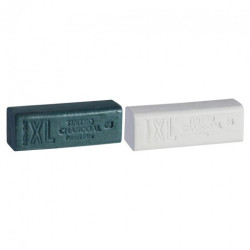
Pastels are shaped like pencils without a wooden frame, instead they are wrapped in paper.
Depending on the binder, they are divided into:
(the more binder, the softer).
The binder for pastels can be gum arabic, tragant, dextrin, milk and sugar.
Often pastels are made without glue if white clay, honey, gypsum, kaolin, talc or magnesia are introduced to break up the tone.
These substances added to the dye powder bind it.
All permanent dyes can be used to make pastel pencils. Only chalk and kaolin - as strongly darkening from the fixative - should be replaced by zinc white.
The substrate for pastels should have a rough surface. Colored or gray cardboard is best for this purpose.
Pastels look most favorably under glass.