The technique has been known for a very long time (Egypt, Greece, Rome).
According to Pliny, young, one-year-old, bright wax was used in encaustics.
First it was de-bleached: shavings were planed and exposed to sunlight.
Then it was floated in water, that is, boiled in it with the addition of alkaline bodies (soda and ammonia).
This is how the wax emulsion was formed.
Swimming was done several times, then everything was left to evaporate the water.
After drying, the wax emulsifies more difficult, and after the third drying - not at all.
Wax prepared in this way, with the addition of resins, became resistant to low and high temperatures.
Normally, wax melts at 60oC, and crumbles to a meal at -10oC.
In the past, wax was emulsified in seawater and encaustic was used to paint ships. The ships were painted artistically.
Encaustic does not require priming and could be used on stone, wood or plaster.
The only drawback of this technique is the difficulty of painting, as the wax sets quickly.
With the addition of resins, it becomes soft and resistant to low and high temperatures and hardens more slowly.
Heated palettes were also used and painted with a special tool, called a canter (heated spatula).
After painting, everything was heated once again. The dyes with the wax melted into one mass, hence the name of the technique (caustiens = hot).
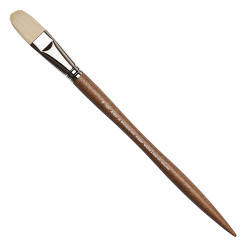
When painting large surfaces, the organ was not applicable and brushes were used, resin and solvent were added to the wax.
The encaustic technique is a weatherproof technique.