In antiquity, watercolor was painted on parchment or thin ivory plates (miniatures) and on linen-dyed cloth.
Originally, flax fibers were used to make paper.
Beginning in the 17th century, cotton was introduced for paper production.
Today, paper is made from wood (lignin), straw, but flax and cotton remain the most valuable raw materials.
In addition, spackle, gypsum, kaolin, chalk, lead white, and to eliminate the yellowish tint - ultramarine and Berlin azure are used for many grades of paper.
Paper is formed by hand (so-called handmade papers) and by machine. Vegetable and animal adhesives or rosin are used to glue the paper. Various chemicals (sodium, chlorine, sulfuric acid) are also used in production. Traces of these compounds remain in the already finished paper and are not insignificant for the dyes used in watercolor. Watercolor requires a good and reliable quality paper, which is both a base and a gesso for it.
Wood and straw papers are not suitable for watercolor, as they brown and blacken quickly in the light.
Cotton paper is not suitable for touch-ups, and the pigments on it distribute unevenly.
The best paper is one that contains only flax fibers, without any additives. Paper used in watercolor must be white, after wetting with water it must not dry quickly, and must not contain traces of chemicals used in production.
Some grades of paper have traces of oil or other fats in their composition, and therefore it is necessary to wash the surface of the paper with distilled water with ammonia before using it for watercolor.
Paper used for watercolor comes in several grades. The most popular is the so-called bristol.
The method of painting with watercolor:
1. lasing.
2. Translucent white of the paper.
3. not using white.
4. no layering.
Palettes made of porcelain or faience or glass.
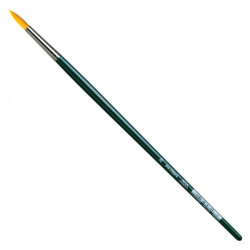
Round brushes, soft with a sharp tip.
Store watercolors in a dry room with moderate light, preferably under glass.
For protection, they can be covered with shellac varnish dissolved in spirit, but this loses their fresh character.