The most popular contemporary temperas are:
- egg,
- casein-based,
- based on vegetable glue.
Egg temperaComposition of egg tempera:
- egg,
- oil,
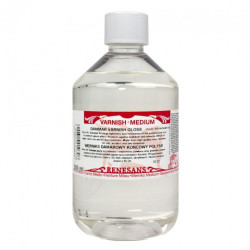
- oil or turpentine varnish,
- colorant.
As you know, the egg has the ability to emulsify an equal volume of oil and a slightly smaller amount of varnish. In practice, however, it is necessary to take a slightly smaller amount of oil, let alone varnish, since a larger amount will cause the emulsion to disintegrate, as well as bring the tempera's properties closer to the oil technique.
Egg tempera binder composition:
- 1 part by weight of egg yolk,
- 1/4 part by weight of oil varnish,
- 1/8 part by weight of linseed oil,
- 1/8 part by weight of poppy seed oil.
Oils need to be mixed with varnish and added to the yolk. As a preservative, 1/2 part by weight of 1% carbolic solution is used.
Egg tempera prepared in this way can be used for two days in such a way that first the dyes are mixed with water, and then the binders are added on the palette.
Egg tempera - less oily:
- 1 whole egg (about 40 cc),
- 1/2 eggshell of oil,
- 1/2 eggshell of vinegar (weak, so that it does not cut the white - it serves as a preservative).
Strain the mixed egg white and yolk through a thick cloth and, stirring, add oil drop by drop.
Finally, add vinegar.
Dyes grated on this binder can be stored for a long time if they are in tubes.
They dissolve in water.
Greasier tempera:
- 1 whole egg,
- 1/2 shell of thickened oil,
- for conservation 2% salicylic acid solution.
Casein temperaCasein for tempera can be obtained either from curd or already from the finished dry product. The finished product is easier to dispense. Casein is superior to egg in its emulsifying power.
Borax, soda and sodium phosphate are used to dissolve casein.
Casein, like egg, can emulsify an equal amount of oil and a slightly smaller amount of varnish.
Composition of casein tempera binder:
- 50 g of casein powder,
- 250 cm3 of water,
- 20 g of borax.
First we pour water over the casein to swell it. Then we add 250 cm3 of water, and finally borax.
Instead of borax, we can also use soda (5g).
For one part of such a casein solution, 2/3 of oil and 1/3 of mastic or damar varnish are taken. Borax is used as a preservative in this case.
Casein tempera dries quickly and becomes insoluble in water.
With a well-prepared emulsion, layers of casein, even thickly layered, do not crack. It has very good adhesion and is used on all sub-images, including the wall. It requires a firm ground, otherwise it can tear the gesso from the substrate.
Rubber temperaMuch weaker than the two tempera mentioned above. It has poor adhesion, covers poorly and cracks easily. Its only advantage is that it does not decompose as quickly as the above types. It is widely used in the industrial production of tempera paints.
All vegetable adhesives have lower emulsifying power and therefore require less oil (for 1 part of rubber - 1/2 ÷ 1/3 part of oil).
For elasticity, 1/12 cz of glycerin is added.